Vocabulary
- Sentence case
Sentence case is the conventional way of using capital letters in a sentence. That is, you only capitalize the first letter of the first word – like you would in a sentence. Proper nouns (including abbreviations, gene names, journal titles, scientific databases, etc.) have initial capitals as well.
Examples:The cat sat on the mat.London is a capital of The United Kingdom of Great Britain and Northern Ireland.
- Title case
Title case is the conventional way of using capital letters in a sentence. That is, you capitalize all principal words. Articles, conjunctions, and prepositions do not get capital letters unless they start the title.
Examples:Snow White and the Seven Dwarfs.Seven Habits of Effective People.
- Plain text
“Normal” text which does not have any special text formatting (i.e. it has default font, size and is not styled into bold or italics).
- Mononym
Person who has only last name (no first name or middle name(s)).
- En dash
The en dash (–) is slightly wider than the hyphen (-) but narrower than the em dash (—). The typical computer keyboard lacks a dedicated key for the en dash, though most word processors provide a means for its insertion.
- Figure panel
Figures can contain several “embedded” images, each of which contains its own identifier - a letter. Those “embedded” images are called figure panels.
Example: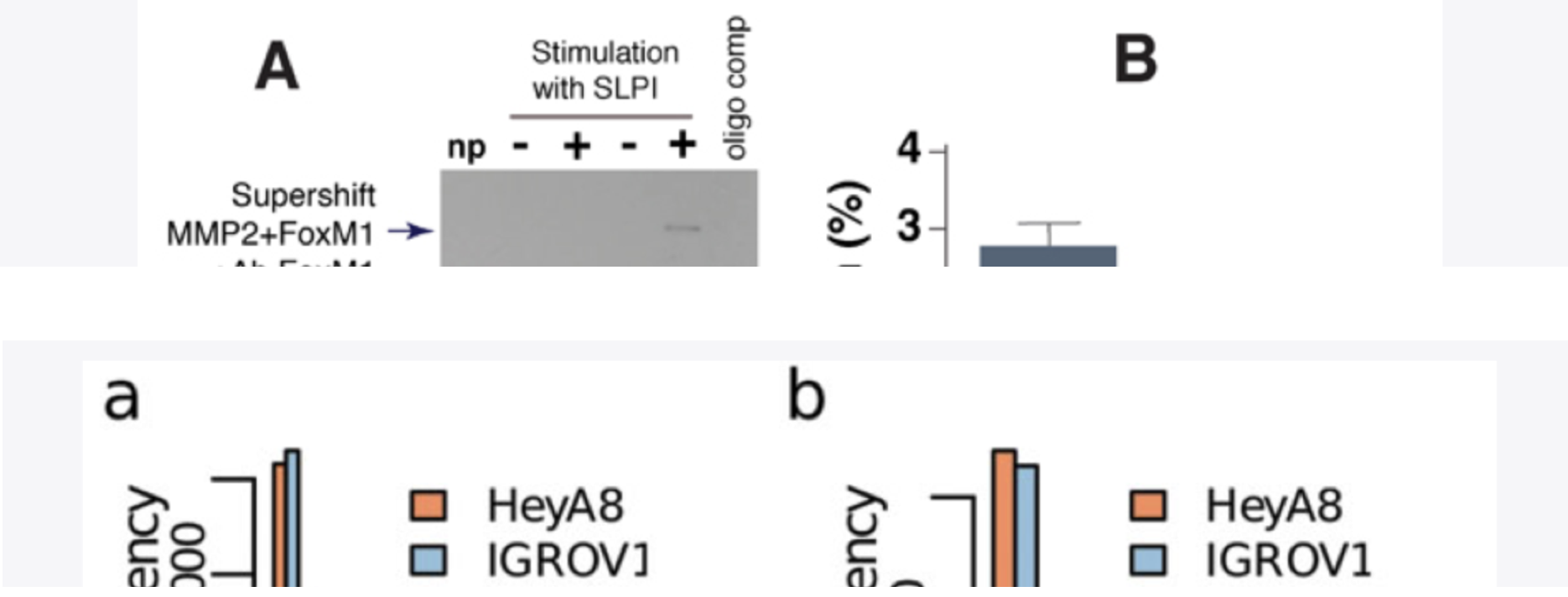
- Large tables
Applicable to Supplementary materials only!
Tables which span across 3 or more pages are considered large tables. Tables which fit into 2 pages should be published as PDF for convenient printing, whilst large tables should be published as Excel (.xlsx) or Word (.docx) documents. See more information in Large tables check
- Shortened format for page number ranges
- Ending page numbers should be shortened to the greatest changed digit.Examples of properly formatted page ranges:5–9 (cannot be shortened)1–17 (cannot be shortened)10–8 (shortened from 10–18)12–22 (cannot be shortened)132–9 (shortened from 132–139)303–27 (shortened from 303–327)342–423 (cannot be shortened)
- Justified text
Text is aligned along the left margin, with letter-spacing and word-spacing adjusted so that the text falls flush with both margins.
- Flush left text
Text is aligned along the left margin.
Notes
- How to check whether term, keyword, etc is in correct case?
Search article text for the term in question. Most likely you will find a few instances, which will give you understanding regarding correct capitalization. If this is not the case, check next points.
Search PubMed site for the term in question.
Search Google for the term in question.
- Optional sections for Editorials
There are optional sections for Editorials that can appear after Keywords section and before Copyright section in this order: Abbreviations, Acknowledgments, Conflicts of Interest and Funding. |
- Accepted variations for China
China
People’s Republic of China
PRC (or P.R.C.)
PR (or P.R.) China
- Accepted variations for Taiwan
Taiwan
Republic of China
ROC (or R.O.C.)
Taiwan, Republic of China
Taiwan, ROC (or R.O.C.)
- Accepted variations for Hong Kong
Hong Kong
Hong Kong SAR
Note
Taiwan and Hong Kong can optionally include China (or any of its allowed variations) as the ultimate country as long as consistency is maintained throughout the affiliations.
- US State abbreviations
State
Abbr.
ALABAMA
AL
ALASKA
AK
ARIZONA
AZ
ARKANSAS
AR
CALIFORNIA
CA
COLORADO
CO
CONNECTICUT
CT
DELAWARE
DE
DISTRICT OF COLUMBIA
DC
FLORIDA
FL
GEORGIA
GA
HAWAII
HI
IDAHO
ID
ILLINOIS
IL
INDIANA
IN
IOWA
IA
KANSAS
KS
KENTUCKY
KY
LOUISIANA
LA
MAINE
ME
MARYLAND
MD
MASSACHUSETTS
MA
MICHIGAN
MI
MINNESOTA
MN
MISSISSIPPI
MS
MISSOURI
MO
MONTANA
MT
NEBRASKA
NE
NEVADA
NV
NEW HAMPSHIRE
NH
NEW JERSEY
NJ
NEW MEXICO
NM
NEW YORK
NY
NORTH CAROLINA
NC
NORTH DAKOTA
ND
OHIO
OH
OKLAHOMA
OK
OREGON
OR
PENNSYLVANIA
PA
RHODE ISLAND
RI
SOUTH CAROLINA
SC
SOUTH DAKOTA
SD
TENNESSEE
TN
TEXAS
TX
UTAH
UT
VERMONT
VT
VIRGINIA
VA
WASHINGTON
WA
WEST VIRGINIA
WV
WISCONSIN
WI
WYOMING
WY
- Nonworking link exceptions
These links are known to be valid but are intermittently working and can be left as-is:
These commonly used links are known to be invalid, and the hyperlink can be removed while leaving the resource name or the website name (without http…) when the resource is known by the name of the website.
Author Query Templates
Note
Please provide a PDF to the authors whenever you are contacting them about any potential changes to their paper. Depending on the situation and the amount of issues, mark the PDF to specifically show them where the issues are, and you can also add suggested edits when applicable. Abstain from sending the authors a Word doc to make changes unless it’s absolutely necessary. Let the authors know that they need to use “Track Changes” if a Word doc is being edited.
Email Title
Response Required - Aging MS XXXXX | PII XXXXXX - XX
Body
Dear Dr. XXX,
I have been working with your article, “XXX”, in preparation for its publication in Aging, and I have a few questions for you:
XXX
Please respond within 48 hours to accommodate our stringent production deadlines and ensure timely publication of your article.
Issues
Alphabetical Figure Legend Panel Callouts
Each figure legend should be formatted so that the first instance of each panel letter is called out in alphabetical order (Ex. A, B, A, C, B, D).
Could you please use the attached PDF to mark the necessary changes to bring your paper into accordance with this standard? Keep in mind that changes made to the panel letters in the figure or the legend may affect in-text callouts throughout the rest of your paper as well.